


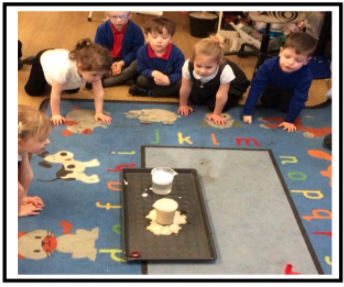
Pupils in EYFS observing an investigation
Science Curriculum
Intent
Introduction – Vision and Aims
At Ridgeway, it is our vision to ignite pupils’ curiosity and encourage them to confidently explore and discover the world around them, so that they develop a deeper understanding of the world we live in.
At Ridgeway, it is our aim for all pupils to:
- to develop pupils’ enjoyment and interest in science and an appreciation of its contribution to all aspects of everyday life
- to build on pupils’ curiosity and sense of awe of the natural world
- to develop pupils’ knowledge and understanding of important scientific ideas, processes and skills and relate these to everyday experiences
- to use a planned range of investigations and practical activities to cultivate learners that are able to work scientifically
- to introduce pupils to the language and vocabulary of science
- to develop pupils’ basic practical skills and their ability to make accurate and appropriate ∙ measurements
- to extend the learning environment for our pupils via our environmental areas and the locality
Curriculum Drivers in Science
We give children opportunities to be imaginative, to use experiences and observations to make connections in their learning and appreciate that learning can be accomplished in different forms. To do this, we have established some key ‘curriculum drivers’ which outline our aspirations for our children by the time they leave us (Expressive Communicators, Healthy Champions, Life Long learners, World Citizens and Open to possibilities). Our ‘curriculum drivers’ are designed to enable our pupils to ‘Reach for the Stars’ through their learning. We aim for our children to grow both academically and socially and our curriculum has been created to achieve these aspirations for all.
ExpresSive Communicators
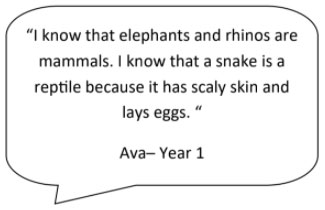
Throughout their time at Ridgeway, our Science curriculum encourages pupils to communicate their ideas and theories, collaborate in order to plan and conduct investigations, communicate their results, discuss their findings and reason the outcomes. Technical and topical vocabulary is learned, practised and used when learning each scientific concept and the vocabulary of working scientifically is taught in a progressive manner from Early Years through to Year 6. This enables our children to become capable and knowledge able scientists who can confidently communicate their scientific under standing.
HealThy Champions
It is vital that pupils understand the importance of maintaining good physical health and that we equip them with the knowledge of how to do so. Through the scientific concept of animals including humans, we teach pupils the importance of eating a balanced diet, the impact of exercise, drugs and lifestyle on their bodies’ functions, the effect of medicines and an understanding of dental care. By ensuring our children leave Ridgeway with this knowledge, we are preparing them to lead a happy and healthy lifestyle.

Nursery learning about their bodies during a Highly Sprung workshop
Life-Long LeArners
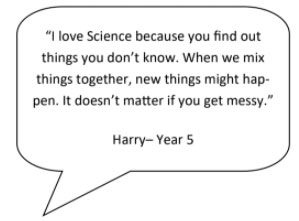
Science lessons at Ridgeway aim to foster enthusiasm and maintain pupils’ curiosity in the world around them. The learning of Science is done in a variety of ways: outdoor learning, exploratory and practical activities, investigations, teacher demonstrations, trips and visitors. The varied and practical experiences we provide our pupils with promote a love of learning and inspire inquisitive minds. Children are encouraged to plan their own investigations and source the equipment they need (resourceful), work collaboratively and build upon the theories and thoughts of others (reciprocity), use results and observations to reconsider their original ideas and to reflect upon their investigations to decide what could be improved or tested further (reflective), to attempt to answer difficult questions and know that we are entitled to have differing opinions and ideas to our peers (resilience).
WoRld Citizens
The teaching of the Science curriculum allows our children to develop an understanding of the world around them and an insight into how major scientific ideas have played a vital role in society. In order to prepare our pupils for life in an increasingly scientific and technological world, we provide them with many varied scientific opportunities: engaging and practical science lessons, trips to places such as the Think Tank in Birmingham, visitors and demonstrations delivered by high school staff.
Open to PoSsibilities
Here at Ridgeway, we recognise that Science plays a vital role within our school community, with many parents and carers having professional careers within scientific fields and industries. Wherever possible, we seek opportunities to call upon these professionals to come into school to share their expertise and provide pupils with the knowledge of careers within the scientific industry. We recognise the valuable contributions that families can make to an engaging Science curriculum and, with their support, we can build the Science capital for all of our children and inspire them to continue to use Science in their everyday life, future education and careers.

Year 1 studying the school environment
Implementation
Curriculum Progression
The Science School Overview, which has been created following the guidance set out in the Science National Curriculum, ensures that progression is catered for as children move through the school. The units systematically build upon children’s prior knowledge, developing their understanding of each scientific concept and the links that can be made.
Ridgeway’s Progression and Vocabulary Documents have also been created, which are used in conjunction with the Science School Overview. The documents feature each threshold concepts (each scientific area of study) and the key scientific vocabulary that should be taught. Under the threshold concepts, the document follows a progression of skills which have been matched to each year group’s unit. The majority of threshold concepts are taught in at least two year groups; this allows pupils to revisit the topic, recap prior learning and then deepen their understanding. The Progression of Working Scientifically document outlines the key skills of scientific enquiry that should be taught within each year group. This is built upon within each Key Stage to allow for progression and to ensure our pupils leave Ridgeway being able to confidently select and use an appropriate approach to answer relevant scientific questions.
In addition, the Progression of Vocabulary document has been created to ensure that vocabulary is progressively taught at the right point to marry with the skills and concepts that are being introduced. This includes a separate section relating to the progression of vocabulary within the area of ‘Working Scientifically.’
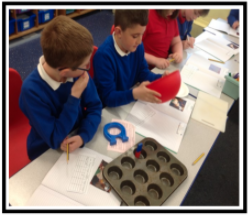
Year 5 exploring forces
Curriculum Progression
Early Years and Foundation Stage
Science in Early Years is covered in the ‘Understanding the World’ area of the EYFS Curriculum. It is introduced indirectly through activities that encourage children to explore, problem solve, observe, predict, think, make decisions and talk about the world around them.
Key Stage 1
The principal focus of Science teaching in Key Stage 1 is to enable pupils to experience and observe phenomena, looking more closely at the natural and manufactured world around them. They should be encouraged to be curious and ask questions about what they notice. They should be helped to develop their understanding of scientific ideas by using different types of scientific enquiry to answer their own questions, including observing changes over a period of time, noticing patterns, grouping and classifying things, carrying out simple comparative tests and finding things out using secondary sources of information. They should begin to use simple scientific language to talk about what they have found out and communicate their ideas to a range of audiences in a variety of ways. Most of the learning about Science should be done through the use of first-hand practical experiences, but there should also be some use of appropriate secondary sources, such as books, photographs and videos.
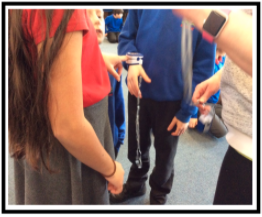
Year 6 measuring pulse rate
Lower Key Stage 2
The principal focus of Science teaching in Lower Key Stage 2 is to enable pupils to broaden their scientific view of the world around them They should do this through exploring, talking about, testing and developing ideas about everyday phenomena and the relationships between living things and familiar environments, and by beginning to develop their ideas about functions, relationships and interactions. They should ask their own questions about what they observe and make some decisions about which types of scientific enquiry are likely to be the best ways of answering them, including observing changes over time, noticing patterns, grouping and classifying things, carrying out simple comparative and fair tests and finding things out using secondary sources. They should draw simple conclusions and use some scientific language, first, to talk about and, later, to write about what they have found out.
Upper Key Stage 2
The principal focus of Science teaching in upper key stage 2 is to enable pupils to develop a deeper understanding of a wide
range of scientific ideas. They should do this through exploring and talking about their ideas; asking their own questions about the scientific phenomena; and analysing functions, relationships and interactions more systematically. In upper key stage 2, pupils should encounter more abstract ideas and begin to recognise how these ideas help them to understand and predict how the world operates. They should also begin to recognise that scientific ideas change and develop over time. They should select the most appropriate ways to answer Science questions using different types of scientific enquiry, including observing changes over different periods of time, noticing patterns, grouping and classifying things, carrying out comparative and fair tests and finding things out using a wide range of secondary sources of information. Pupils should draw conclusions based on their data and observations, use evidence to justify their ideas, and use their scientific knowledge and understanding to explain their findings.
At each learning stage, pupils should also be able to use, read and spell scientific vocabulary at a level which is appropriate to their increasing knowledge.
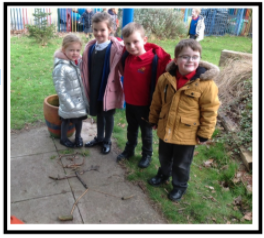
Year 2 learning outside in the school garden
Curriculum Progression
Working Scientifically
‘Working Scientifically’ specifies the understanding of the nature, processes and methods of Science for each year group. During all key stages, the ‘Working Scientifically’ key skills must be taught within each area of Science, in accordance with the 2014 National Curriculum programme of study. It should not be taught as a separate strand.
These types of enquiry should include: observing over time; pattern seeking; identifying, classifying and grouping; comparative and fair testing (controlled investigations); and researching using secondary sources. Pupils should seek answers to questions through collecting, analysing and presenting data. The Progression of Working Scientifically document specifies the key
skills and vocabulary that need to be taught in each year group in order to ensure pupils build upon their understanding and
knowledge of ‘Working Scientifically’ and leave Ridgeway as confident and independent scientists.
Spoken Language
The National Curriculum reflects the importance of spoken language in pupils’ development across the whole curriculum. The
quality and variety of language that pupils hear and speak are key factors in developing their scientific vocabulary and articulating scientific concepts clearly and precisely. They must be assisted in making their thinking clear, both to themselves and others, and teachers should ensure that pupils build secure foundations by using discussion to probe and remedy their misconceptions. Scientific vocabulary slides have been created for each unit and for each year group which are used throughout each lesson. These slides contain images to help support understanding and are displayed to support the discussions taking place within each Science lesson.
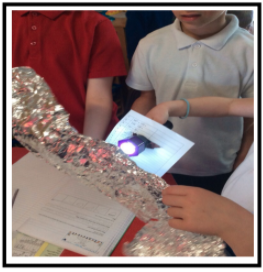
Year 3 investigating light sources
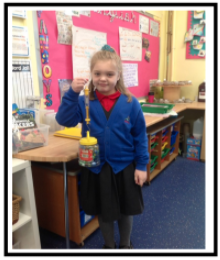
A Year 5 pupil who designed a fair test to consider the impact of air resistance
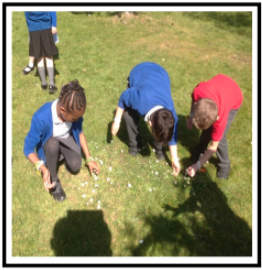
Year 2 on a ‘thinking walk’ to discover where different plants grow
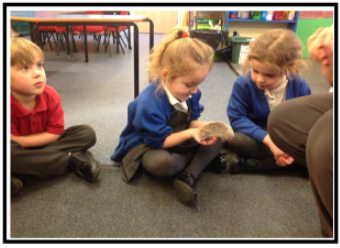
Year 1 exploring living things during a workshop visit with The Exotic Zoo
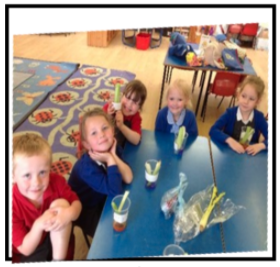
EYFS and KS1 pupils finding awe and wonder in science during an after school club
Enrichment
Providing learning experiences that are rich and meaningful for our children is a driving force behind the planning, development and teaching of our curriculum. As part of our Science curriculum, children are provided with opportunities that not only foster enthusiasm and curiosity but also develop their understanding of scientific concepts.
These opportunities include;
- Working with the physical theatre group Highly Sprung for pupils to engage in bespoke workshops to explore areas of the Science curriculum in exciting and immersive ways.
- Educational visits to places such as The Think Tank and visitors in school – such as Telford Exotic Zoo.
- Science days and Science weeks are planned into the whole school curriculum on a rolling three-year basis, allowing children to be engage in the world of Science and discovery.
- In-school Science clubs which give pupils the opportunity to further develop their enquiry skills and confidence with activities beyond the science curriculum.
- Our Forest School allows children to become immersed in Science with our Forest School leader. Children are encouraged to continue their learning outside of the classroom and to engage with the environment.
These enrichment opportunities inspire our pupils, help to develop their understanding and extend their learning.
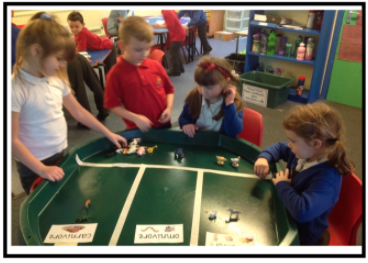
KS1 pupils sorting common animals