Intent
Introduction—Vision and Aims
At Ridgeway, we want our children to experience more than what is offered through the National Curriculum. Life in the wider world demands so much more and we aim to ensure all our children have the knowledge and skills to succeed in life through the experiences we provide so that they can all be STARS.
We see reading as an integral part of the school curriculum that impacts upon all learning and opens the doors to a world of knowledge and discovery. Our priority is both the teaching of reading skills and the enjoyment of literature, with the goal of enabling our pupils to become confident, lifelong readers who show passion and enjoyment for reading, sharing with pupils our own enthusiasm for literature.
As a school, we will ensure that pupils are taught to read with fluency, accuracy and understanding through a variety of opportunities, and recognise that learning to read is the most important skill to learn during early schooling. Our intention is for all pupils to receive quality teaching of phonics and to develop secure phonetic awareness in order to confidently use their skills for a phonics first approach to reading.
We aim to instil a love of reading by placing high-quality and engaging texts at the heart of our curriculum, feeding pupils’ imaginations and curious minds. We want children to enjoy reading a wide range of books from a variety of cultures and in a range of different genres, styles and formats, and be able to talk and discuss texts and authors. We aim to use reading as a way to expand pupils’ vocabulary and open the door to words that pupils would not normally encounter.
By helping children to recognise the value of reading as a life skill, we encourage pupils to read widely across all genres to develop their knowledge of themselves and the world in which they live, to establish an appreciation and love of reading and to enable pupils to reflect upon reading experiences in order to discover their interests. It is our intention to ensure that, by the end of their primary education, all pupils are able to read fluently, and with confidence, in any subject in their forthcoming secondary education.
Curriculum Drivers in Reading
We give children opportunities to be imaginative, to use experiences and observations to make connections in their learning and appreciate that learning can be accomplished in different forms. To do this, we have established some key ‘curriculum drivers’ which outline our aspirations for our children by the time they leave us (Expressive Communicators, Healthy Champions, Life Long learners, World Citizens and Open to possibilities). Our ‘curriculum drivers’ are designed to enable our pupils to ‘Reach for the Stars’ through their learning. We aim for our children to grow both academically and socially and our curriculum has been created to achieve these aspirations for all.
ExpresSive Communicators
Reading is hugely important in the journey our children take in order to become Expressive Communicators. Through the teaching of reading, pupils acquire language and develop their understanding of vocabulary. Children read a range of texts and learn about word meaning which equips them with the vocabulary they need to communicate their ideas and viewpoints with ease and clarity. Reading together provides an excellent opportunity for discussion, creating an environment where pupils can comfortably and confidently articulate and share their thoughts about their reading.
HealThy Champions
Reading provides important opportunities to support pupil well-being, introducing different emotions or experiences to readers. Across our curriculum, books form a significant way to provide structure around a particular discussion or for pupils to explore and make sense of their emotions. Discussing the words, themes and images that are seen in a book can be easily used to prompt children to share their thoughts on matters that are linked to healthy well-being. Using carefully selected texts allows pupils the opportunity to open-up about things on their mind and they can identify and relate to stories by making links with characters and events. Reading opportunities also enable our pupils to escape into new worlds and can be particularly helpful as a way to cope with anxiety and worry, or to improve a child’s mood.
Life-Long LeArners
In the early stages of schooling, our pupils develop the phonic skills they need to read accurately, building to become fluent readers with good comprehension. Their continued development of reading skills and understanding are essential for life-long learning. Through their curriculum journey, pupils will develop the four Rs.
Children will develop resilience by gaining the ability to read and interpret complex and demanding texts and by strengthening and drawing on critical reading skills.
Children are taught to be resourceful by drawing on their literacy knowledge when they encounter unfamiliar words and terms, in order to decipher word meaning in context. Our curriculum teaches pupils to use strategies and use clues within a text to better understand vocabulary, and ultimately becoming a confident, critical and active reader. Pupil will also learn the purpose and structure of a range of text types so that they can understand and access materials in order to source new information as required.
The curriculum teaches pupils to be reciprocal in their reading. Pupils take turns in participating in or leading a dialogue about what has been read. During reading sessions, pupils will improve their reading comprehension by asking their own questions about texts and by discussing the text with others, requiring a higher level of understanding and engagement. Through the careful selection of narratives, children are also taught to put themselves in someone else’s shoes in order to understand how they may feel.
The teaching of reading allows pupils to be reflective and enables pupils to evaluate texts, as part of their comprehension development. Reflection is modelled by adults throughout the reading process and pupils are encouraged to do the same during group discussions or individual reflections. Pupils also regularly complete book recommendations and review the books that they have read.

EYFS pupils enjoying reading in the book corner
WoRld Citizens
Through the teaching of our reading curriculum, children learn to further understand the diversity of the world in which they live. This is achieved by pupils exploring a range of cultural texts and engaging in critical discussion. Through reading, pupils develop cultural awareness by reading about people from other cultures and people from different times and places. By linking reading to other areas of our curriculum, children can connect books to topics and skills that they are learning, in order to deepen their understanding of the world. Children are supported to see the world through other people’s eyes, which helps them to better interpret their own experiences and to develop empathy.
Open to PoSsibilities
Children cannot aspire to things that they have never encountered. Our curriculum opens their eyes to new possibilities so they can develop aspirational attitudes and understand how to achieve their full potential. The teaching of our reading curriculum allows pupils to aspire to achieve success beyond what is familiar to them, by exposing them to a rich variety of fiction and non-fiction texts and by broadening their understanding of vocabulary. Children will develop aspirational attitudes and gain a desire to act upon what they have read about, beyond their perceived limitations. Children will be inspired by characters, events and the authors who write books, learning about overcoming barriers, reaching their potential and a range of life scenarios.
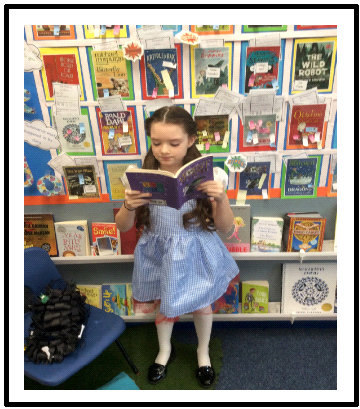
Year 5 pupil sharing her current reading book
Implementation
Curriculum Progression
The Early Years Foundation Stage and National Curriculum (2014) ensures that progression in reading is catered for as pupils move through the school, from Nursery through to Key Stage Two. The curriculum documents show the steps of progress that pupils should make, building upon previous learning.
Foundation Stage
At Ridgeway, reading begins in the Foundation Stage through the sharing of books with simple or no text so that the children can learn how to tell a story using images. The focus at the early stage is on developing understanding and conveying meaning of the texts that pupils read rather than on reading words accurately. Building on what pupils already know about reading and stories, the teacher helps develop early reading behaviours through shared reading. This includes holding a book the right way up, following the text from left to right, knowing that print carries meaning and identifying elements of a story. Pupils have many stories read to them and they have opportunities to retell narratives themselves. There is a strong focus on children learning to decode through daily phonics following the Read Write Inc. Phonics programme.
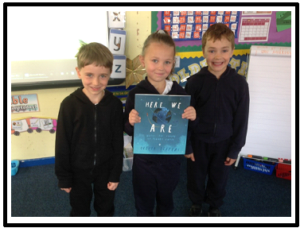
Pupils sharing a whole-school focus text, ‘Here We Are’ written by Oliver Jeffers

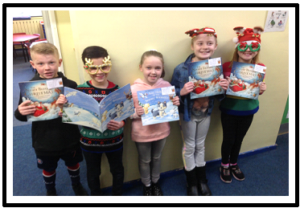
Children from across the school receiving books from ‘The Sun Books For Schools’ Competition
Curriculum Progression
Reception and Key Stage One
Children progress through the early reading stages accordingly with each RWI reading phase, acquiring phonic skills. There is an emphasis on developing pupils’ interest and pleasure as they learn to read independently and with confidence. They focus on words and sentences and how they are put together to form texts, and teachers model a range of reading strategies, including the identification of sentence structure and the function of punctuation marks. These reading strategies are further developed through shared reading in whole class reading lessons. Pupils listen to and read a range of texts in order to bring meaning and be able to say what they like or dislike about them. In addition to the development of phonics, pupils will grow their sight vocabulary for common exception words and will read books providing a variety of fiction, non-fiction and poetry with focussed learning of comprehension skills.
Key Stage Two
In Key Stage Two, pupils meet a wider range of texts in fiction, poetry and non-fiction. The teaching of whole class reading continues to support pupils in further developing reading strategies. These sessions provide an opportunity to teach reading in relation to the varied needs of pupil groups, using the same high-quality text, which is beyond the level that children can read independently. There continues to be a high level of interaction between the teacher and pupils, and pupils further develop their individual responses and interpretations rather than narrowly focused comprehension. Effective teaching enables pupils to develop fluency, intonation and comprehension skills. Carefully chosen texts are used to offer challenge to all pupils in the class, with a particular emphasis on deepening their understanding of vocabulary, building this understanding as they progress through their reading journey.
Enrichment
Enhancing learning experiences is a driving force behind the planning, development and teaching of our reading curriculum.
Reading for pleasure is at the heart of reading at Ridgeway. Throughout the year, regular events are planned to promote reading for pleasure in the school community. These focus events allow pupils to be immersed into the world of reading.
Whole School Book Events- We enjoy participating in national events, such as World Book Day or Pyjamarama, organised by The Book Trust, where our pupils take part in storytelling, author quizzes, book discussions and have the opportunity to dress up in pyjamas or as their favourite book character.
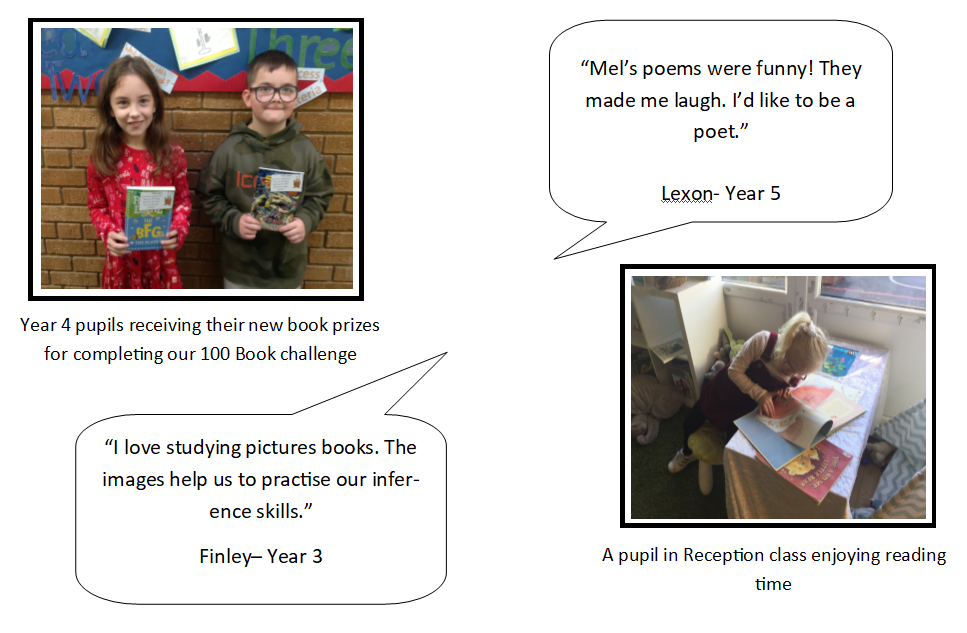
Reading Challenges- Reading challenges are organised throughout the year. Some challenges are completed in the classroom and others outside of school, during the longer holidays and in partnership with parents. These competitions include prizes for pupils who participate.
Home Reading- At Ridgeway, we believe that developing strong links between home and school reading is vital in ensuring children become lifelong readers. Pupils are provided with home reading books, including a levelled book (either a hard copy or MyOn) and a ‘100’ book.
Parental Engagement Inspire Reading- Ridgeway staff regularly invite parents into school to participate in ‘Inspire’ workshops to support and develop home learning. Within these sessions, parents are able to observe how reading is taught within school and gain advice on how to support their children with reading. Support packs and resources are provided to use at home.
School Visits- As reading is at the core of our curriculum, school visits are often linked to focus texts that pupils study in the classroom.
Ridgeway 100 Books- Across Reception to Year 6, pupils are challenged to read 100 carefully selected books during each school phase. These books are part of the ‘Ridgeway 100 Books’ and have been chosen to widen the range of books that pupils access, growing their imagination, vocabulary and interest in reading. The collection comprises of picture books, chapter books, comic strips, historical novels and poetry and includes classics, recent releases and books written by authors that pupils might not have heard of.
Links with Burntwood Library- Ridgeway has established strong links with our local library in Burntwood. Class visits take place where pupils can borrow books from the library to enjoy reading back at school.
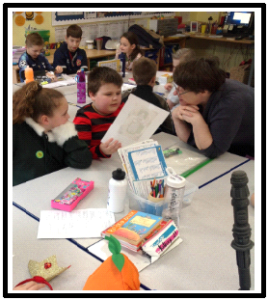
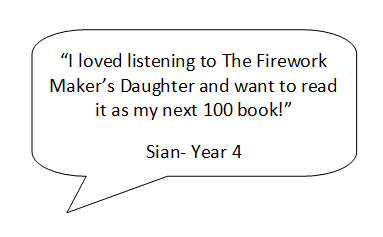
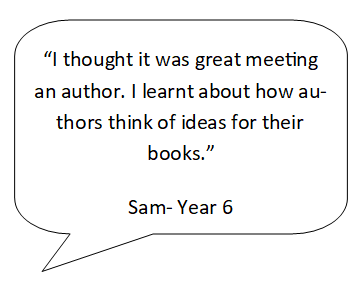
Author and Illustrator Visits- We regularly look to invite local authors and illustrators into school to inspire pupils and develop their love of reading. Pupils love to meet these special visitors.
School Book Fair- We hold two successful Book Fairs every year and our pupils love to come along and choose new books! The