Intent
Introduction
The aim of history is to stimulate the children’s interest and understanding about the life of people who lived in the past and events that took place in the past. We teach children a sense of chronology and how to use the skills of historical enquiry and interpretation to investigate past events and significant people. Consequently, children will understand more about who they are and their origins and they will understand how events in the past have influenced our lives today.
Vision & Aims
- to encourage an interest in the past
- to enable children to know about significant events in history and to appreciate how things have changed over time
- to enable children to know about the significant lives of men and women in the past and how they have influenced the future
- to develop a sense of chronology
- to develop knowledge and understanding of the history of other countries
- to develop the skills of historical enquiry and investigation .
Curriculum Drivers in History
We give children opportunities to be imaginative, to use experiences and observations to make connections in their learning and appreciate that learning can be accomplished in different forms. To do this, we have established some key ‘curriculum drivers’ which outline our aspirations for our children by the time they leave us (Expressive Communicators, Healthy Champions, Life Long learners, World Citizens and Open to possibilities). Our ‘curriculum drivers’ are designed to enable our pupils to ‘Reach for the Stars’ through their learning. We aim for our children to grow both academically and socially and our curriculum has been created to achieve these aspirations for all.
ExpresSive Communicators
At Ridgeway we encourage children to communicate their ideas using historical vocabulary and ensure that all children are able to do this with confidence and enthusiasm. The development of both skill-based and topic based vocabulary is embedded within lessons throughout all year groups. This develops in a progressive manner from teaching vocabulary based on the past and present to allow our Reception children to talk about their own experiences, to encouraging children to use their communication skills to select and present information from a range of sources in year six. In history, children are encouraged speak and listen with respect and to broaden their vocabulary through the asking and answering of questions to further their understanding. This enables our children to become investigative and thoughtful historians that respect the views and opinions of others.
Life-Long LeArners
In history lessons we aim to teach children reciprocity and reflection to develop their ability to learn from their peers and reflect on their previous understanding of historical events. Children are encouraged to extend and deepen chronological knowledge and understanding of British, local and world history by reflecting on previous learning and understanding where events and time periods fit on a timeline. At Ridgeway we encourage historical enquiry and independent investigation of time periods and civilisations. Children are then encouraged to share their acquired knowledge and opinions with their peers.
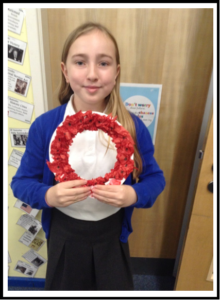
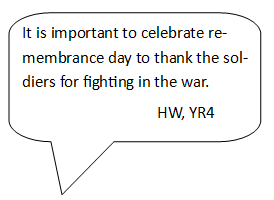
We made Poppy Wreaths for Remembrance Day.
WoRld Citizens
In history, pupils are encouraged to share their views and opinions knowing that their voice matters. Children are aware of the importance of mutual respect and manners when debating their opinions on historical matters. They gain a wide understanding of the world as it was in the past by role playing historical events and researching how people dressed and lived in a wide variety of different time periods.
Open to PoSsibilities
Through the exploration of significant people of the past, pupils are encouraged to challenge themselves to gain high aspirations about what their future ‘world of work’ may look like. Through their learning, children are able to identify achievements in a variety of different areas of work, such as space travel (Neil Armstrong), nursing (Mary Nightingale), members of parliament (Samuel Pepys) and the careers of their parents and grandparents By exploring a variety of career paths, children are able to recognise their own ability to achieve success.

Implementation
Activities to ensure National Curriculum coverage and a progression of skills have been planned by the coordinator and teachers representing each year group. A yearly overview of subjects taught in each group has been developed, in which History is covered for at least two half terms in each year group, with the exception of year six. Foundation subject plans are produced for all year groups, except for the early years. During both key stages History is taught in a lively, practical way that has relevance to the children’s experiences. Topics have been decided based on the objectives suggested in the 2014 National Curriculum. Lessons use a range of imaginative activities such as story, drama, art and ICT.
Curriculum Progression
EYFS
History is taught in Reception as an integral part of their topic work, this is delivered through child-initiated and adult led activities. The children are given the opportunity to find out about past and present events in their own lives and those of their families and other people they know. In the Foundation stage, history makes a significant contribution to developing a child’s understanding of the world through activities such as looking at pictures of famous people in history or discovering the meaning of new and old in relation to their own lives.
Key stage One
During Key Stage One, pupils learn about people’s lives and lifestyles. They find out about significant men, women, children and events from the recent and more distant past in Britain and the wider world. They listen, and respond to stories and use a variety of sources of information to help them ask and answer questions. They learn how the past is different from the present.
Key Stage Two
During Key Stage 2 pupils learn about significant people, events and places from both recent and more distant past. They learn about change and continuity in their own area, in Britain and in other parts of the world. They look at history in a variety of ways, for example from political, economic, technological and scientific, social, religious, cultural perspectives. They use different sources of information to help them investigate the past both in depth and in overview, using dates and historical vocabulary to describe events, people and developments. They also learn that the past can be represented by and in Curriculum Progression.
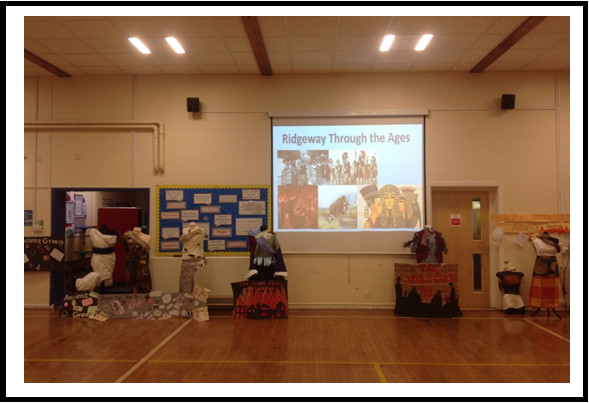
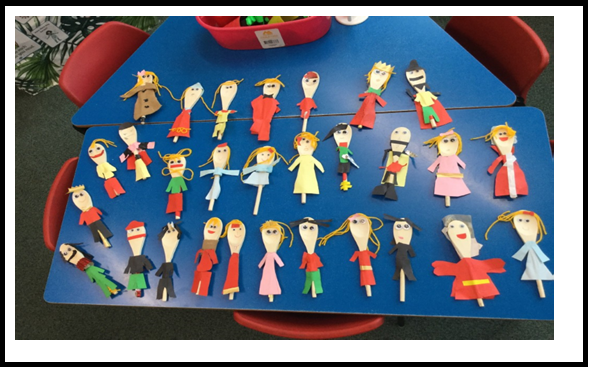
Each year group designed outfits from different historical periods of time with support from pupils from the local high school
Enrichment
At Ridgeway we value the importance of providing a wide range of enrichment activities to foster a love of history and enhance the high-quality learning that happens day to day in our classrooms. During a child’s time at Ridgeway they will develop their knowledge of history through investigation, research and shared experiences, showing empathy and understanding for the lives of people that have lived before them.
Our enrichment opportunities include:
- Inviting grandparents to come into school and join the children for an afternoon tea. This provides children with the opportunity to compare their experiences of life and school with the experiences of their Grandparents . Grandparents are encouraged to bring in an object from the past for children to explore which allows them to develop their understanding of how things have changed in recent history.
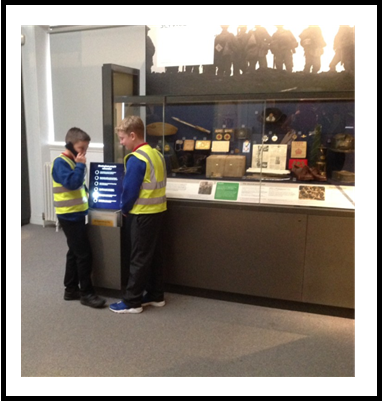
- Planning educational trips to places such as Birmingham Museum, to allow children to explore a wide range of Anglo Saxon artefacts and understand the heritage of their local area.
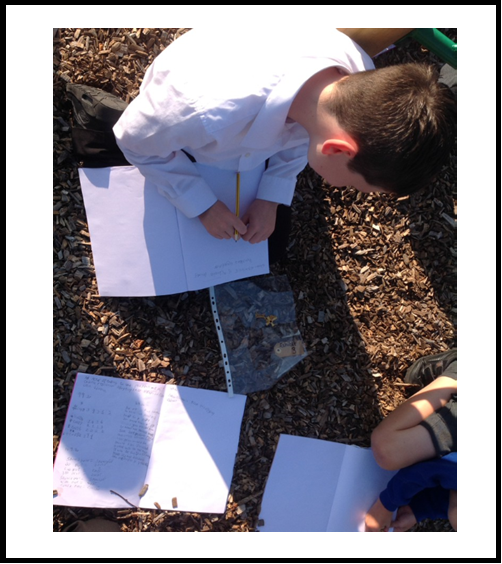
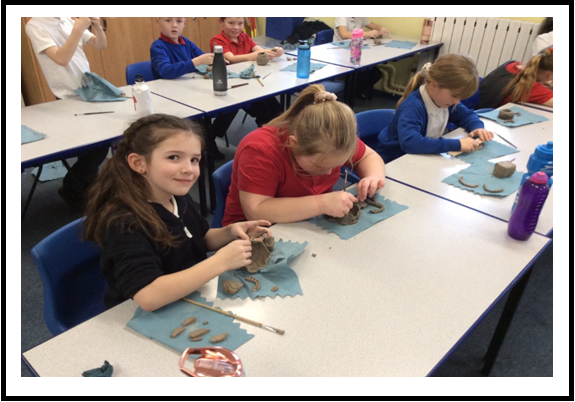
- History days and History weeks are planned to encourage children to conduct in depth research and investigations to fully understand what life would have been like in their era of study. This could include dressing up, discovering or making ancient artefacts, listening to music of the time and role playing different experiences.
Working with the physical theatre group Highly Sprung for pupils to engage in bespoke workshops .
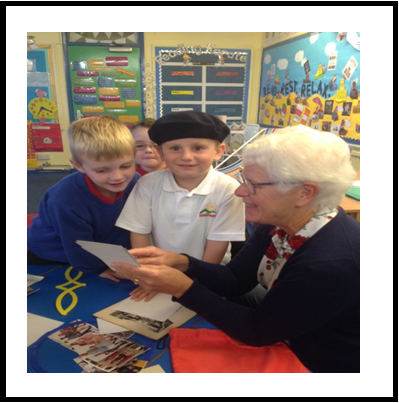
Year 1 invited grandparents in to talk about the past