


Year 6 building air-raid shelters.
Intent
Introduction—Vision and Aims
We want our children to experience more than what is offered through the National Curriculum. Life in the wider world demands so much more and we aim to ensure all our children have the knowledge and skills to succeed in life through the experiences we provide so that they can all be STARS!
At Ridgeway, Design and Technology is vital in order to prepare our children to learn about the developing world. The subject encourages children to become creative problem-solvers, both as individuals and as part of a team. Through the study of design and technology, the children combine practical skills with an understanding of aesthetic, social and environmental issues. Design and Technology helps all children to become informed consumers and potential innovators. By teaching Design and Technology, it assists children in developing a greater awareness and understanding of how everyday products are designed and made
Our vision is to encourage children to become imaginative thinkers who feel empowered to talk about what they like and dislike in a product or design. We aim to encourage children to consider products, how they work, the techniques, tools and materials needed to create these products and to understand and apply these ideas to their own products following the design, make, evaluate process.
Curriculum Drivers in Design & Technology
We give children opportunities to be imaginative, to use experiences and observations to make connections in their learning and appreciate that learning can be accomplished in different forms. To do this, we have established some key ‘curriculum drivers’ which outline our aspirations for our children by the time they leave us (Expressive Communicators, Healthy Champions, Life Long learners, World Citizens and Open to possibilities). Our ‘curriculum drivers’ are designed to enable our pupils to ‘Reach for the Stars’ through their learning. We aim for our children to grow both academically and socially and our curriculum has been created to achieve these aspirations for all.
ExpresSive Communicators
The teaching of Design and Technology allows our children to develop the skills that they need to become effective expressive communicators through discussing their ideas and designs of products in a variety of ways. Communication is key to working in groups to make products using different materials and also in the evaluation aspect of Design and Technology in order to gain useful feedback.
HealThy Champions
Design and Technology is vital in the journey our children take in order to become Healthy Champions. Through the teaching of our DT curriculum, children will learn to further understand the ways in which food is manufactured and produced and how and what foods are healthy for us. We encourage the children to develop a sense of responsibility in following safe procedures when making things. Through their understanding of personal hygiene, they also learn how to prevent disease from spreading when working with food.
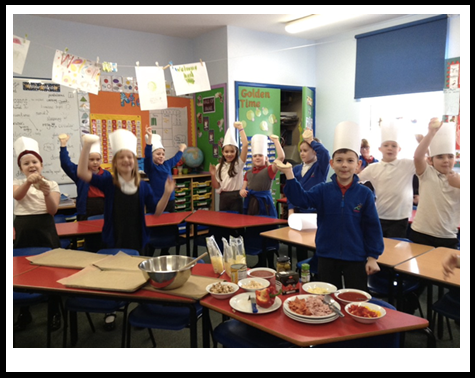
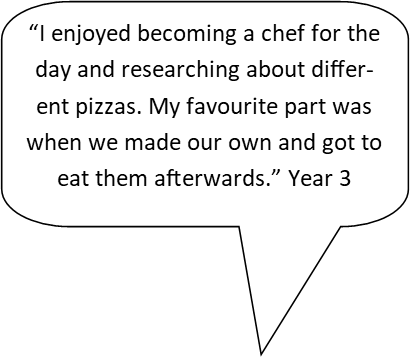
Year 3 making pizzas.
Open to PoSsibilities
The teaching of our Design and Technology curriculum allows our children to learn that setting goals and aspirations is vital to opening them up to new possibilities and thinking about possible career steps for aspirational purposes.
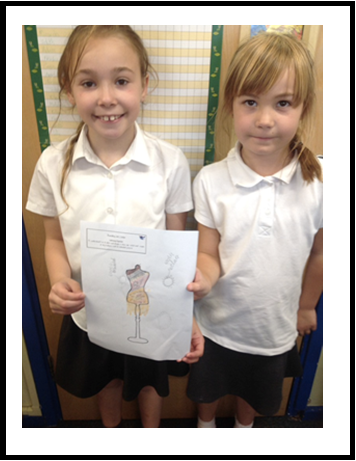
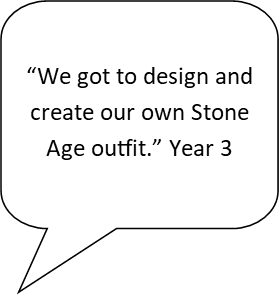
Year 3 designing their Stone Age outfits.
Implementation
Curriculum Progression
The Design and Technology National Curriculum ensures that progression is catered for as children move through the school as well as links made to previous knowledge. The units systematically build upon children’s prior knowledge, building upon their understanding of each objective and skill and the links that can be made.
Ridgeway’s Progression and Vocabulary Document has also been created, which is used in conjunction with the Design and Technology National Curriculum. The document features the threshold concepts and the year groups in which the threshold concepts are to be covered. In addition, there is a progression of vocabulary, which ensures that vocabulary is progressively taught at the right point to marry with the skills that are being introduced.
Curriculum Progression
Pupils should be taught to develop their Design and Technology capability through combining their designing and making skills with knowledge and understanding as outlined in the National Curriculum Design and Technology programmes of study. Foundation Stage plan to Early Learning Goals and the Early Years’ Profile. We ensure, where possible, we make use of the local environment and the cross curricular links within topics and year groups. We use a variety of teaching and learning styles in design and technology lessons. Our principal aim is to develop children’s skills, knowledge and understanding.
Sometimes we do this through whole-class teaching, while at other times we engage the children in a research and design and make activity. We encourage the children to ask, as well as answer questions which will help them to investigate and evaluate products they are presented with. They have the opportunity to use various materials, such as wood, plastic and fabric and use these in a variety of ways. They use ICT in D&T lessons where it enhances their learning. The children develop their speaking and listening skills through discussions, evaluations and presenting reports to the rest of the class. They engage in a wide variety of problem-solving activities
Our Design and Technology learning character allows children to understand what lesson they are taking part in, determining the key aspect of learning, especially if links are made across other subjects.
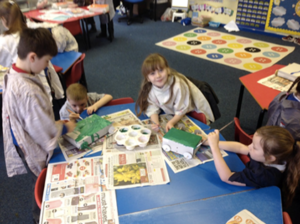
Year 2 painting their moving vehicles.
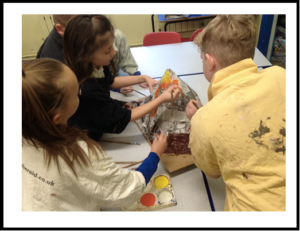
Year 5 making volcanoes.
Enrichment
Enhancing learning experiences is a driving force behind the planning, development and teaching of our curriculum. During Design and Technology lessons, children have opportunities to develop their understanding of this subject by visiting different locations (food restaurants and museums to name a few) where they are able to participate in workshops. In the past, children have visited an ASK Italian restaurant , where they have learnt about different types of pizza and proceeded to create their own. The children also learn from visitors that have different careers within the scope of Design and Technology in order to raise aspirations amongst the children.
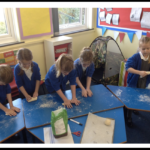
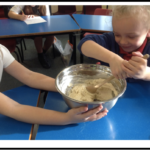
Year 2 kneading dough.
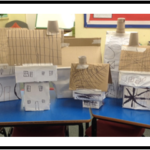
Year 2 building Tudor houses.
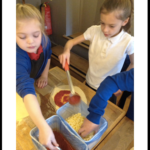
Year 4 visiting ASK Italian restaurant.
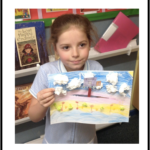
Year 3 making moving pictures.
Year 2 baking gluten free bread.