


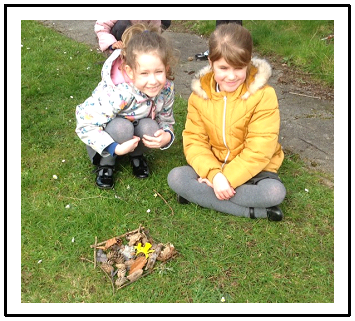
Outdoor Art Sculptures—Year 2
Art Curriculum
Intent
Introduction – Vision and Aims
Art at Ridgeway Primary School is an important part of the curriculum and is a significant part of cross-curricular learning. All staff are committed to improving standards and creating an environment in which art education is seen as a lifelong process. We aim to develop children as artists and creative individuals. Art is a means of stimulating children’s creativity and imagination through visual, tactile and sensory experiences. Through experimenting with colour, form and texture, it offers a unique way of helping children to understand and respond to the world around them. Investigating different forms of art allows children to communicate feelings, thoughts and ideas about life in different times and cultures. A significant element within Art is evaluation. Through each learning stage, children will develop skills in evaluating their own work and that of other artists, helping them to understand the value and significance of Art in society.
Curriculum Drivers in ART
We give children opportunities to be imaginative, to use experiences and observations to make connections in their learning and appreciate that learning can be accomplished in different forms. To do this, we have established some key ‘curriculum drivers’ which outline our aspirations for our children by the time they leave us (Expressive Communicators, Healthy Champions, Life Long learners, World Citizens and Open to possibilities). Our ‘curriculum drivers’ are designed to enable our pupils to ‘Reach for the Stars’ through their learning. We aim for our children to grow both academically and socially and our curriculum has been created to achieve these aspirations for all.
ExpresSive Communicators
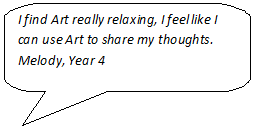
In Art children are encouraged to give opinions about well know Art and each other’s work. This is done in a safe environment where they are taught to respect each other’s opinions and be mindful about the things that they say and how it affects others. Art also gives children who struggle with communication he opportunity to express themselves through different media.
Life-Long LeArners
Art gives children the opportunity to build their resilience as they can often struggle with making their work ‘perfect’. Art encourages children to make their own decisions about the resources they want to use and how they use them.
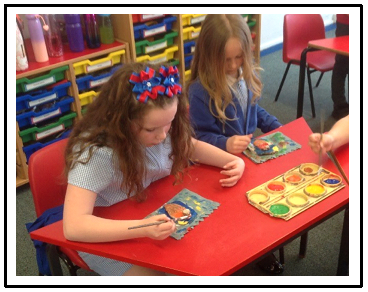
Firstly. Children sculpted clay tiles, then when dried they decorated them with paint— Year 3
WoRld Citizens
Art helps us to ‘understand how artists, craft makers and designers influence our work. Children learn about Artwork and Artists in the wider world as well as those within our own community.
Implementation
Curriculum Organisation
The teaching of skills are taught as part of a programme which shows progression across the school. Art and Design skills are usually taught thematically, offering cross curricular links to subjects. However, there are times when the teaching of certain skills are taught as stand-alone lessons, where staff find a more effective learning outcome can be achieved. Activities to ensure National Curriculum coverage and a progression of skills have been planned by the coordinator and teachers representing each year group. A skills progression document has recently been developed which outlines the key objectives that each year group needs to cover.
Curriculum Progression
EYFS
Art is taught right from the earliest stages of a child’s development at Ridgeway. Children from birth to 3 focus on their senses and using paints to create marks. As they progress through the early years foundation stage this develops to making more meaningful marks and exploring with a wider range of tools and materials. By the end of Reception children will be able to share their ideas talking about the processes they have used.
Key Stage one:
As children progress into KS1 they build on the knowledge they have developed during their time in the EYFS. Children will begin to draw with purpose using a variety of marks to express their thoughts and feelings. Children will also explore more explicitly the work of craft makers from other cultures looking at the similarities and differences between their works. Children will work with malleable materials such as playdough and salt dough to begin sculpting.
Key Stage two:
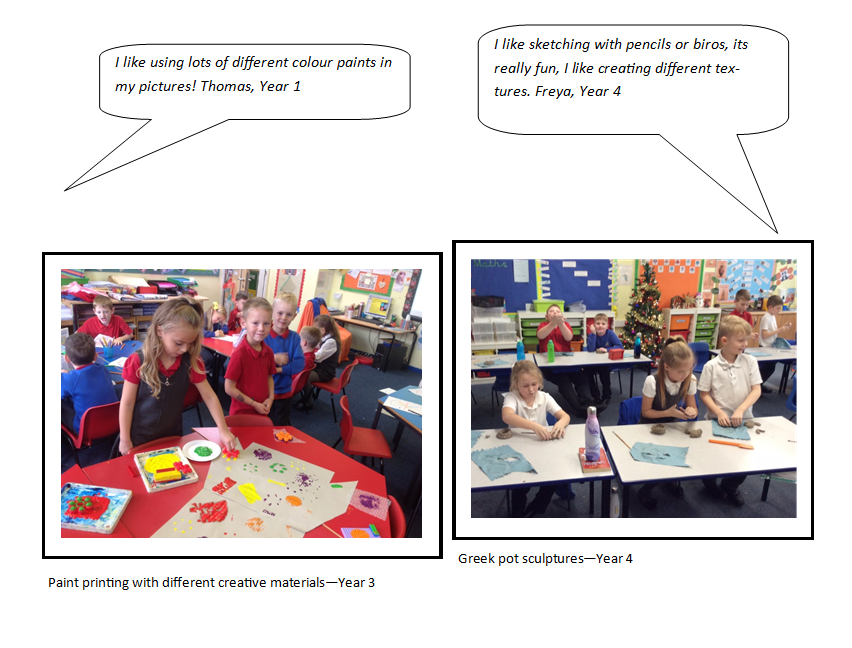
As children move into KS2 they will have developed a good knowledge of colour, tone and texture and will be able to choose the correct technique to represent their subject. Children will use clay and man-made materials to create sculptures and apply a range of techniques to the surface. They will also look at craft makers and art from other cultures and historical periods and discuss how they can use their techniques to influence their own work.
Enrichment
Enhancing learning experiences is a driving force behind the planning, development and teaching of our curriculum. The children learn from visitors that have different careers within the scope of Art and Design in order to raise aspirations amongst the children. Where possible interactive resources are used to help children experience places such as Art gallery’s which they might otherwise not have the opportunity to visit. Art is linked to a variety of subjects catering for all interests and has been an integral part of our focus weeks and ELL weeks in previous years. We welcome opportunities to work with our community and the Art hub has planned local art exhibits for children and parents to visit.
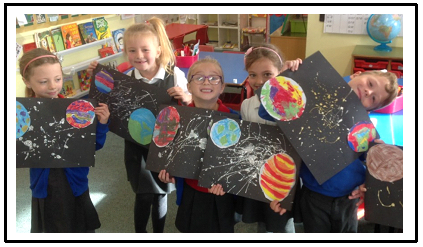
Painting planets for a school display—Year 2
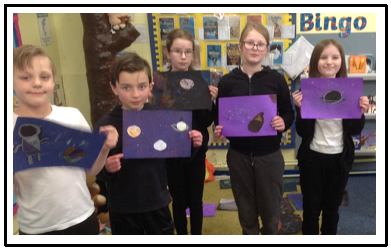
Year 5 have been using famous artist, Peter Thorpe, to inspire their artwork.
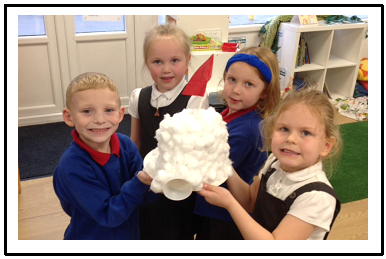
Building 3D Igloos—Year 1


Exploring making patterns using tools and paint—Year 4